• About
  • Index of locations
  • Index of people
  • Navigation tips

Eberlein genealogy and photographs

Eberlein genealogy and photographs

Monthly Archives: October 2012

They Call Me Frau Pastor

24 Wednesday Oct 2012

Posted by Kristen James Eberlein in Newspapers

≈ 1 Comment

Tags

Rubina E Wegener (1908-2012)

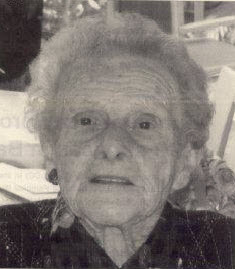
‘Frau Pastor’ Ruby Kriewaldt aged 99

It amuses me how some pastor’s wives today distance themselves from the ministry of their husbands, with the apparent excuse that the divine call was not issued to them. How times have changed! In my experience, the pastor’s wife was considered to be part and parcel of the call.

I was born in 1908, the eldest child of humble parents, Gustav and Helena Wegener, who worked a small farm near Palmer, South Australia. They gave me the name Rubina. After basic schooling at Palmer Primary School, I eventually found work in a local store-cum-post office. I helped my parents with farm work like milking cows, collecting eggs, and feeding the horses. I was active in church, teaching Sunday school and playing the organ.

My parents strongly encouraged me to marry Pastor Emil Kriewaldt from Brinkworth, who had been tentatively courting me while serving the Karoonda parish. We were married in 1932, and my life changed dramatically! At the tender age of 24, I became ‘Frau Pastor’ and felt like a fish out of water.

The first shock I received in my new role was being told by the elders that I would be required to milk two cows to supplement my husband’s stipend. (Thank God I had been a farm girl!) For 30 years, rain or shine, I milked the cows, separated the milk and sold the cream once a week to the butter factory at Balaklava. Sometimes it was necessary to start milking at 5:00 am in order to accompany my husband to various church commitments.

The next shock I received was at my first Women’s Guild meeting. I was informed that it was traditional for the pastor’s wife to be the president of the guild. Although I protested that I had never attended a guild meeting in my life, this didn’t count and I held that position until we left Brinkworth in 1965.

Thanks to my musical ability, I was called upon to play the organ for services at Brinksworth, Blyth, Clare and Canowie Belt. Occasionally I played with my first child, Brenz, tucked into my left arm.

My favorite pastime and hobby was gardening. I love flowers, even plastic ones, and my garden usually looked a picture. It was natural, therefore, that I was expected to provide flowers for weddings. Usually I ended up decorating the church as well. Since it was unforgivable to not use any flowers donated by the members, sometimes I ended up with 20+ vases on or near the altar and along the aisles. I lost count of how many times I did this. It was demanding work and sometimes took two days to complete. Thoroughly tired out from this work, I sometimes also fronted up as the organist and sang a solo for the ceremony.

Since Brinkworth had no suitable accommodation for visitors, the Lutheran manse was expected to be the local B&B. Visiting dignitaries like Sir Robert Nichols. MP, Harold Raymond of the Band Concert fame, pastors and even swaggies were catered for at the manse. Schoolteachers were sometimes given board for up to two years. One week I washed and ironed 27 shirts!

One on occasion, during a heatwave, a district synod was hosted by the Brinkworth congregation, and the manse was expected to cater for the official’s midday meals. At one of the meals a certain pastor announced that he was going to take off his coat because of the heat. All the others followed suit, except the president who declared, ‘My parishioners have never seen my without my pastor’s Rock (coat) even when I am chopping wood, and I have no intention of taking it off now.’

For many years I taught religious instruction at the Brinkworth Area School and accompanied my husband on many visits to the member’s homes and to the hospital. As well as these ‘churchy’ activities, I was engaged in community activities. I was the president of the local Red Cross for many years and an official in the Country Women’s Association. I also taught pianoforte.

Until a new manse was built in the late 1950s, we lived in a badly cracked stone home which featured a wood stove, a sink without a drain, no hot-water service and an outside toilet at the back of the year. However, in spite of these conditions, I raised three healthy boys and have some wonderful memories of the people who passed through our humble dwelling.
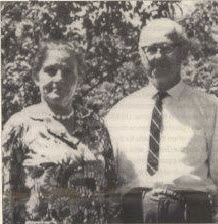
Ruby and Pastor Emil Kriewaldt (‘Krie’) in 1966

In 1966 we left Brinkworth to retire in our own home in Elizabeth. However, it wasn’t long before I was assisting my husband, who agreed to look after the Hillcrest congregation on a part-time basis and to serve as a prison chaplain.

He died virtually with his boots on in 1978. The I found life somewhat quieter and less hectic. Twenty-six years later, in 2004, I gave my garden a fond farewell and moved into hostel accommodation at Mannum, near where I grew up.

I have continued to write and send cards to many people (another passion of mine). In spite of my failing eyesight, which means that I am writing almost from memory, I have sent over 600 cards and letters since moving to Mannum. My sons say that I keep Australia Post in the black!

Following my 100th birthday in October, I thank God for blessing me so richly and keeping me healthy over a long and active life. (I have been in hospital only one day since giving birth to my children.) I thank God for the privilege of being a pastor’s wife. I never minded playing second fiddle to my beloved ‘Krie’ and considered it an honor to serve by his side. Am I old-fashioned?

Source: “They Call Me Frau Pastor,” The Lutheran, 2008. Scanned photocopy provided by Jonathan Brenz Kriewaldt, 23 October 2012.
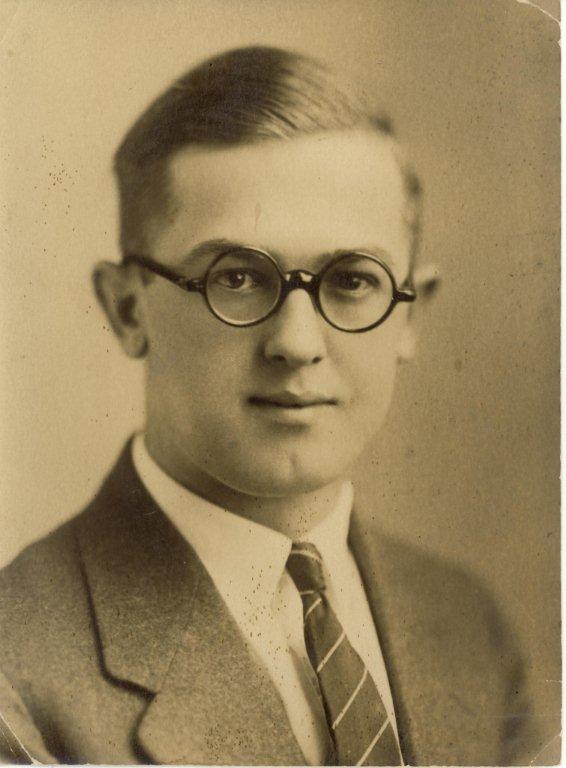
Emil Theodor Brenz Kriewaldt, 1925

24 Wednesday Oct 2012

Posted by Kristen James Eberlein in Individual portraits

≈ Leave a comment

Tags

Emil T B Kriewaldt (1903-1977)

This photograph was probably taken for his graduation from Concordia Seminary, St. Louis, Missouri, in 1925.

Portrait of Emil Theodore Brenz Kriewaldt, 1925

Scanned photograph provided by Jonathan Brenz Kriewaldt, 24 October 2012

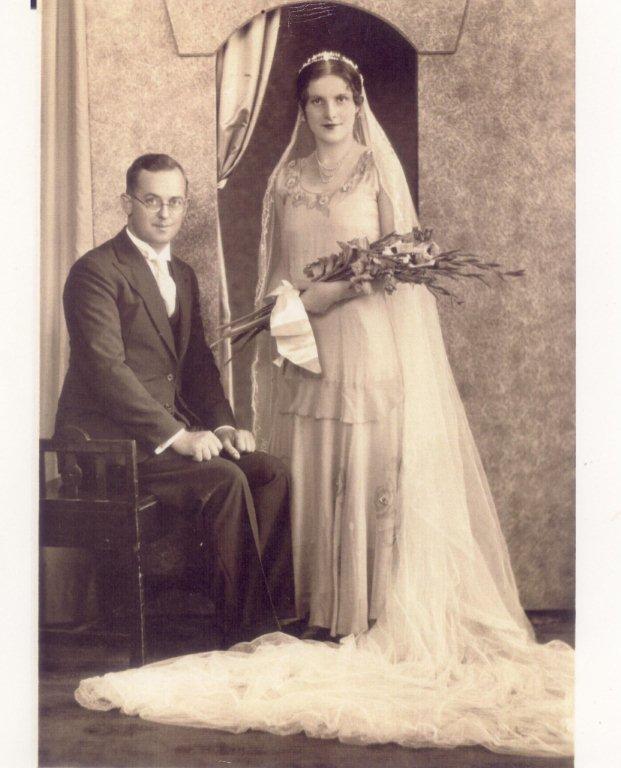
Emil Theodor Brenz Kriewaldt and Rubina Elsa Wegener, 1932

24 Wednesday Oct 2012

Posted by Kristen James Eberlein in Wedding portraits

≈ 1 Comment

Tags

Emil T B Kriewaldt (1903-1977), Rubina E Wegener (1908-2012)

Emil and Rubina were married spontaneously on 24 May 1932, in Adelaide, South Australia, in the study of the local pastor, Rev. Janzow. This photograph, in which Rubina is wearing her sister-in-law’s wedding dress, was taken later after relatives asked about wedding photos.

Wedding photo of Emil Theodore Brenz Kriewaldt and Rubina Elsa Wegener, 1932

Scanned photograph provided by Jonathan Brenz Kriewaldt, 24 October 2012

Missionary Heroes of the Faith: Conrad F. Kellermann (1897-1984)

23 Tuesday Oct 2012

Posted by Kristen James Eberlein in Newspapers

≈ 2 Comments

Tags

Conrad F Kellermann (1897-1984)

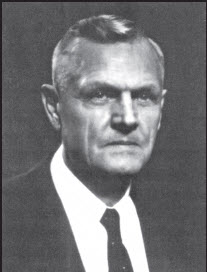
“Kelly, you be the preacher. Use your preacher voice!” cheered the young boys playing church on the windswept plains of Missouri. Years later, the powerful voice of that preacher resounded across the crowded congregation, broadcasting the good news of God’s grace. It was a booming voice that resonated for years. The forceful, formal oratory of Rev. Conrad F. Kellermann reverberated down the decades as it spread the gospel of Christ to thousands of people. His voice became his hallmark.

Conrad F. KellermannConrad Kellermann was born August 5, 1897, in Little Rock, MO, the son of Pastor Herman Kellermann. Conrad was named after his grandfather, a prominent St. Louis Lutheran whose construction company helped build Concordia Seminary. As a little boy in dusty overalls imitating his father, “Kelly” loved to preach to his childhood buddies. Conrad received his elementary education in a one-room Lutheran school taught mainly by his father.

After graduating from Concordia Seminary in 1919, he was called to guide a mission field of five stations covering about 100 miles of wilderness on the prairies of western South Dakota. Congregations were organized at Philip and Milesville. He spent nine years as pastor of Trinity-Mansfield, SD. Kellermann accepted a call to St. Matthew’s-Miami in 1932, mainly because he sensed the enormous missionary challenge in the growing area. When Kellermann, his wife, Caroline, and their six children arrived in November 1932, in the depths of the Great Depression, St. Matthew’s was the only Missouri Synod congregation in Dade County and had 69 struggling members. He began an aggressive campaign to build membership and start missions in the Miami area.

One of the high points of his ministry was the baptism of 36 adults and children on Palm Sunday in 1935. There were 200 in Sunday School in those early days. In 1937 Kellermann was a key figure in the organization of the District Walther League. That year St. Matthew’s started a mission on Miami Beach. In 1940 Kellermann conducted the first Lutheran service in Key West and helped start Redeemer-Miami Shores. During World War II he served as chaplain to German prisoners of war in three POW camps in the Miami area.

In 1947, with an impressive 10-year record of coordinating South Florida mission work, he was a pastoral delegate to Synod’s Centennial Convention in Chicago where the petition for the formation of a new Florida-Georgia District was presented. His booming voice and oratorical style implored implored that Christ’s work be further facilitated through this new endeavor. At the Florida-Georgia District organizational convention in Orlando in February 1948, Kellermann was elected President.

While serving as District President, Kellermann’s powerful voice echoed everywhere throughout the Miami area as he continued the mission expansion that resulted in 16 additional LCMS churches in Dade County by 1964.

Kellermann led the District for nine strategic years, from 1948 to 1957, and was named Honorary President in 1959. He was recognized for having successfully led the fledgling District through difficult and challenging years with patience, optimism, faith and unfailing courage.

After 48 years of unflagging Christian service, 35 of them spent at St. Matthew’s and in vocal District leadership, Kellermann retired on March 1, 1967. His ongoing efforts for the Lord were recognized on April 24, 1981, when the District granted him the Doulos tou Christou award for his distinctive service as a trailblazer.

On January 15, 1984, Concordia Seminary-St. Louis, conferred upon Kellermann the Doctor of Divinity degree in recognition of his “concern for the proclamation of the Gospel, his labor as a trailblazing pioneer, the establishment of Lutheranism in South Florida, his expansion of mission work in a burgeoning population, and his leadership in shaping and serving the Florida-Georgia District.”

In the evening of his life, an operation reduced his once-powerful voice to little more than a whisper. Pastor Kellermann said, “My voice is gone, and you know how important a voice is to a preacher.” Today, however, that powerful voice resounds through the years in his lasting contributions, which still speak to us.

Source: Extract from “Missionary Heroes of the Faith,” Lutheran Life, June-July 2008, page 8.

Gravestone,Wilhelmina Eberlein Kellermann (1868-1954)

23 Tuesday Oct 2012

Posted by Kristen James Eberlein in Gravestones

≈ Leave a comment

Tags

Wilhelmina M Eberlein (1868-1954)

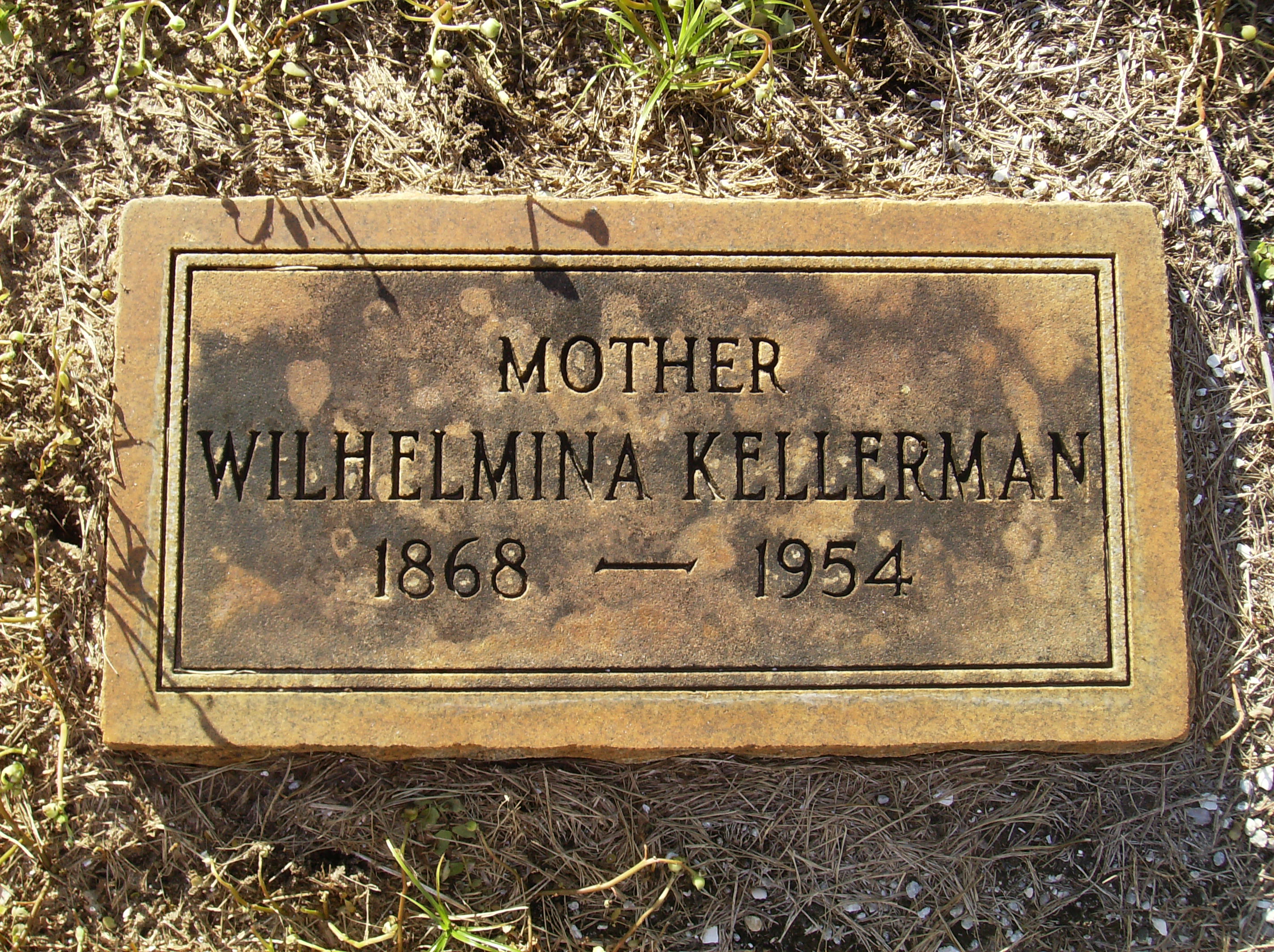
Gravestone, Wilhemina (Eberlein) Kellermann

Gravestone, Wilhelmina (Eberlein) Kellermann, Crestlawn Cemetery, Vero Beach, Florida. Photograph graciously taken by a Findagrave.com volunteer in October 2012.

Edna and Eunice Pluedeman

22 Monday Oct 2012

Posted by Kristen James Eberlein in Other photographs

≈ Leave a comment

Tags

Edna A Pluedemann (1894-1995), Eunice Pluedemann (1896-1985)

Here is another previously unidentified photograph that I think I have figured out. The photo was taken by Myhre Studio in Luverne, Minnesota — a photography studio that opened in 1892 and amazingly is still in existence. Luverne is the county seat of Rock County, which sits in the southwestern corner of Minnesota on the border with South Dakota.

Nathalie (“Dolly”) Eberlein and her husband, Gus Pluedeman, lived in Rock County, Minnesota at the time of both the 1895 Minnesota census and the 1900 federal census. The children in the photo must be their two daughters, Edna (born 1894) and Eunice (born 1897).

Edna and Eunice Pluedeman

Image

John V. Eberlein at work

22 Monday Oct 2012

Tags

John V Eberlein (1861-1922)

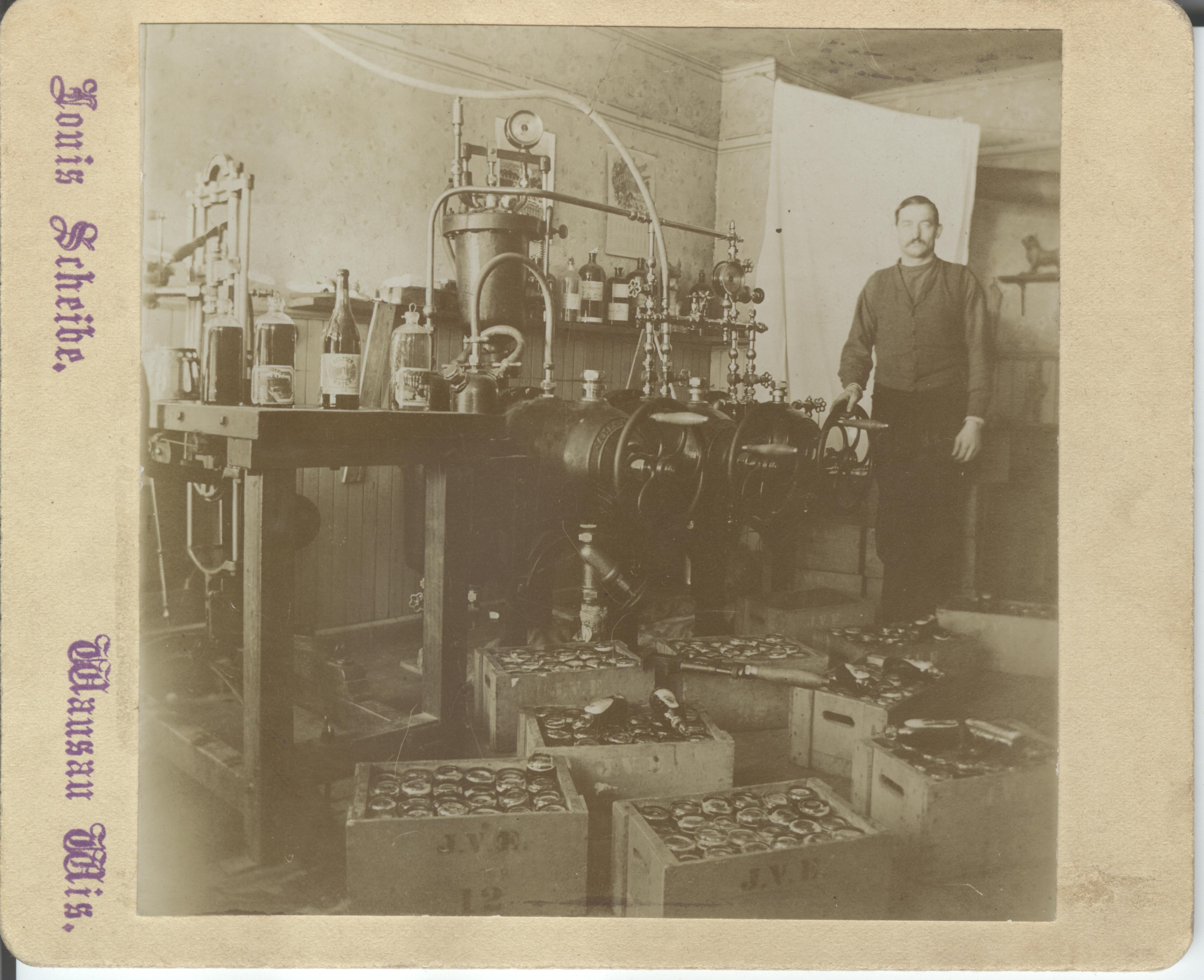
John Valentine Eberlein at work, Wausau, Wisconsin

Posted by Kristen James Eberlein | Filed under Other photographs

≈ Leave a comment

Eberleins at the fox farm

21 Sunday Oct 2012

Posted by Kristen James Eberlein in Other photographs

≈ Leave a comment

Tags

Alwina Duecker (1885-1968), Frederic C Eberlein (1919-2010), Frederick A Eberlein (1875-1956), Margaret R Eberlein (1910-1962), William F Eberlein (1917-1986)

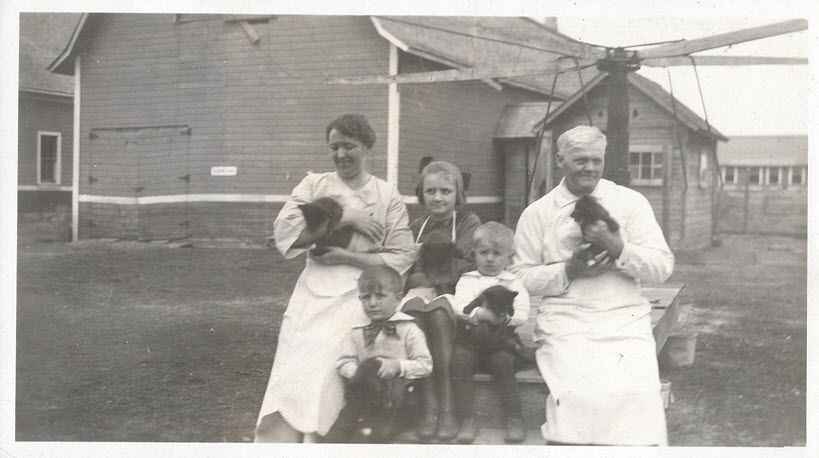
Frederick A. Eberlein raised foxes at his farm in Shawano.

Back row: Alwina Duecker Eberlein; Marge Eberlein; Fritz Eberlein; Frederick A. Eberlein
Front row: William F. Eberlein

Back to Home in American

21 Sunday Oct 2012

Posted by Kristen James Eberlein in Newspapers

≈ Leave a comment

Tags

Emma B Eberlein (1872-1948)

LAST ARTICLE ABOUT AUSTRALIA, STORY TOLD BY MRS. EMMA KRIEWALDT

DEPARTURE OF THE SHIPS

Breaking Up of Home Ties, When Band Plays and the Great Crowds Sing Songs


‘You see,’ said Mrs. Kriewaldt, ‘after a boy has enlisted in the army, had received training and had shipped to England, it was easily six months from time of enlistment before he saw any fighting. No wonder the boys had the spirit of adventure. When the troops left Australia a demonstration was always given the boys. Great crowds gathered at the wharves. The soldier boys had long paper ribbons rolled up in a roll. One end of this was held by the soldier’s sweetheart, and the other by the soldier on board. As the ship steamed away from from the dock, the ribbon was let out it’s [sic] entire length and still the two held on, until the ribbon had stretched to the breaking point. Thus were the love ties broken in allegory. The crowds sang God Save The King and Rule Brittanica and the bands played patriotic  march tunes.”

“My own boys caught the inspiration, and in all seriousness began to talk of enlisting, and the oldest one, you know, might easily pass the age limit. Well, I tried to show him that what he had seen was only the grandeur of war, that the awfulness of it was something remote, but most terribly real. I then proposed to him that if it were adventure and a trip that he wanted, we would come to American,” said Mrs. Kriewaldt, “and here we are.”

“We have a farm and some other property back there, which I have left in the hands of a good Christian friend until the war is over. No German can sell property there, no one with German blood even three generations removed can sell or buy property without the permission of the government. The reason for this strict rule is that they fear that the money received from the sale might fall in the hands of the enemy. I could have secured permission from the commission I think, but all I would have been allowed to take out of the country was two hundred fifty dollars. So, what was the use?

“Rather than make such sacrifice out of my property, I preferred to leave it with this friend and run the risk of it surviving the war. One of our neighbors went away to fight the enemy and left a wife with ten children. When I think of this, I am so glad that we had this dear America to come to. Naturally my heart is back in that land that meant so much to me, and to my husband and children, but the boys are fast acquiring American ways and I think they are going to like it here, and of course it is easy for me to resume the manners and costumes that I knew in my childhood, in this my native land.”

The End.!

Source: Photocopy of article from the Shawano County Journal, hand-dated Jan 1917; paragraphs added. In the Frederic C. Eberlein genealogical files.

Mary Katherine Reichel, 1886-1970

21 Sunday Oct 2012

Posted by Kristen James Eberlein in Individual portraits

≈ Leave a comment

Tags

Mary Katherine Reichel (1886-1970)

This photo was unidentified, other than a penciled note made by my Uncle Fritz — “? Reichel,” but I think the resemblance to the oldest child in the portrait of Reichel children is unmistakable. She probably did not use Mary as her name; census records for 1900-1940 list her as “Catherine,” “Katherine,” “Kathryn,” or “Catheryn.”

← Older posts
Newer posts →

Recent Posts

  • Extended Kellerman family, 12 November 1940 Saturday, 22 June 2019
  • Walter F Pluedemann at the Mankato Commercial College Friday, 21 June 2019
  • William Metcher Weds Friday, 21 June 2019
  • Walter Friedrich Pluedemann (1903-1977) Friday, 21 June 2019
  • Kellerman family, 12 November 1940 Thursday, 20 June 2019

Archives

  • June 2019
  • July 2013
  • January 2013
  • December 2012
  • November 2012
  • October 2012
  • September 2012

Categories

  • Art
  • Biography
  • Church records
  • Citizenship
  • Descendant reports
  • Diaries, letters, and manuscripts
  • Ephemera
  • Genealogical research
  • Military
  • Newspapers
  • Obituaries
  • Photographs
    • Family portraits
    • Gravestones
    • Individual portraits
    • Other photographs
    • Wedding portraits
  • Research notes
  • Vital records

Meta

  • Create account
  • Log in
  • Entries feed
  • Comments feed
  • WordPress.com

Blog at WordPress.com.

  • Subscribe Subscribed
    • Eberlein genealogy and photographs
    • Already have a WordPress.com account? Log in now.
    • Eberlein genealogy and photographs
    • Subscribe Subscribed
    • Sign up
    • Log in
    • Report this content
    • View site in Reader
    • Manage subscriptions
    • Collapse this bar
 

Loading Comments...