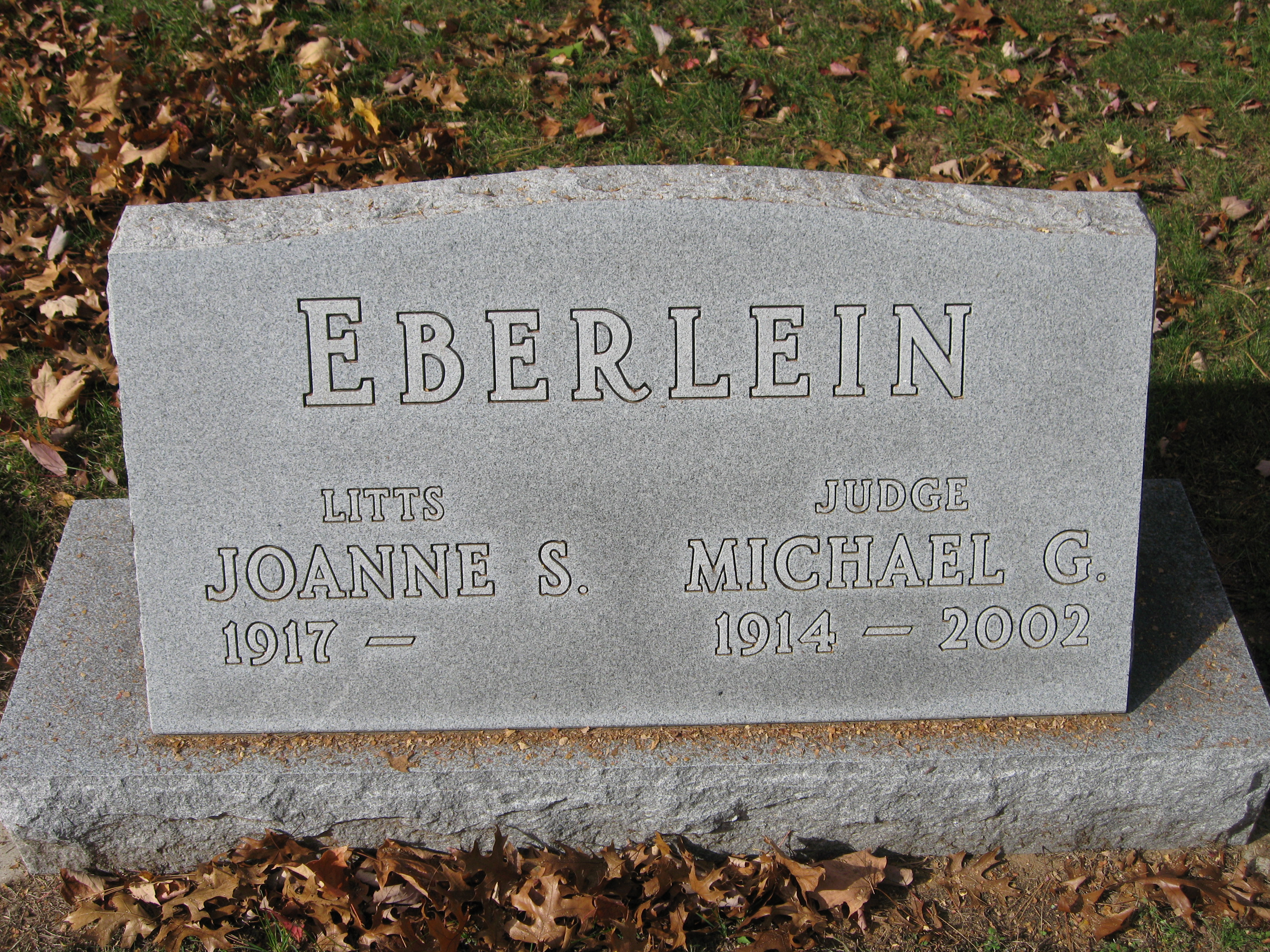
Gravestone, Michael G. Eberlein, Woodlawn Cemetery, Shawano, Wisconsin. Photograph taken by Kristen James Eberlein, October 2007.
20 Saturday Oct 2012
Posted in Gravestones
Gravestone, Michael G. Eberlein, Woodlawn Cemetery, Shawano, Wisconsin. Photograph taken by Kristen James Eberlein, October 2007.
20 Saturday Oct 2012
Posted in Newspapers
Tags
Emil P Kriewaldt (1870-1916), Emma B Eberlein (1872-1948), Frederic C Eberlein (1919-2010), Martin C Kriewaldt (1900-1960)
By FRANK MEYER
Leader correspondent
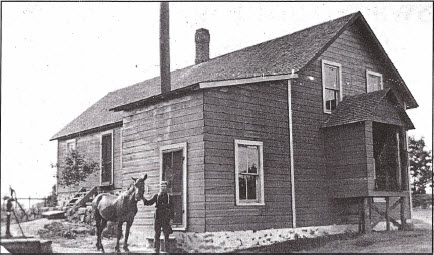
John Kriewaldt with one of his 22 horse [sic] outside the family cheese factory in 1911.
Many fields of endeavor — law, public office, dairy farming, cheesemaking, and judiciary service constitute parts of this combined family legacy.
Frederic C. Eberlein, former district attorney and now retired, has provided a detailed chronology of a family history that spans both decades and continents.
One member of this enlarged family, Martin C. Kriewaldt, distinguished himself as a professor of law, a barrister, and wound up as a justice of the Supreme Court in Darwin, Australia.
In 1895 the Rev. Emil Kriewaldt and Emma Eberlein were mamed in Shawano. Emma was born near Hermansfort, where she attended grade school, her family then moved to Shawano. Finishing high school at age 16 she returned to Hermansfort to teach, then to Shawano. The local paper reports that at age 19 at a teachers conference she was assigned the topic of “maintaining discipline in a one room school.”
The Rev. Emil Kriewaldt was a graduate of the Lutheran seminary in St. Louis. Soon after their marriage in 1895 he received a “call” to a Lutheran church in a rural area in South Australia.
Martin was the third of four sons.
In 1914 Australia declared war on Germany. Many people of Germian ancestry were subject to persecution, their homes confiscated, imprisoned, books burned, German-made pianos became kindling wood for patriotic rallies.
The family stood firm until the death of the Rev. Kriewaldt in 1915. Unwilling to face persecution alone, she abandoned her parish and home and returned to Shawano, with her four sons and lived with the Eberlein and Kriewaldt families.
One son worked on a ranch in California, another, living with the Kriewaldt family attended the University of Wisconsin school of agriculture and studied cheese making. The third, Martin attended Shawano High School and graduated in 1918. His classmates, among others, were judge Dillett and Louis Cattau.
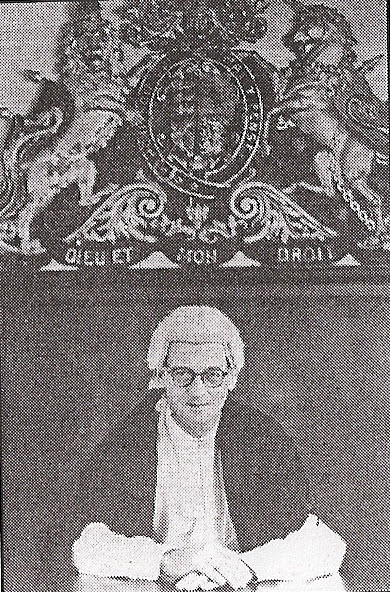
Martin C. Kriewaldt, in a photo from the 1950s — who graduated from Shawano High School in 1918 — was a justice on the Supreme Court in Darwin, Australia. He died in 1960.
Martin received a regents scholarship and attended the University of California at Berkeley, pursued an honors program and participated in varsity debate.
After two years he transferred to the University of Wisconsin law school at Madison, made law review, graduated with honors, elected to Phi Beta Kappa, and was awarded the Vilas medal for forensics.
After the war, he returned to Australia and finished his law training at the University of South Australia law school. He practiced as a solicitor and barrister in Adelaide, and was a professor of real property law at the university, editing a treatise on real property law, still used in Australian and New Zealand law schools.
Commissioned as an officer in the Royal Australian Air Force he served in the South Pacific until the end of the war in 1945. However, he was retained in the military to serve as a judge on a military tribunal which tried Japanese war criminals. The trials, took place on the isle of Morotai — the scene of many atrocities, and included crimes committed against Australian soldiers, depicted in the movie “Bridge Over the River Kwai.”
The world’s attention became directed to the plight of the Australian aborigines, long a persecuted“ people in that land. Judge Kriewaldt was appointed by the prime minister of Australia to replace a “racist judge.” The fairness and temperament of judge Kriewaldt drew exceptional acclaim from the columnist-author Robert Ruark who praised judge Kriewaldt following his sentencing of two wealthy white brothers for “beating six black “aborigines with stock whips.”
The world might be truly proud of Mr. Justice Kriewaldt,” wrote columnist Ruark. At that time such sentencing of white people was extremely rare.
Upon judge Martin Kriewaldt’s death in 1960 the aborigine people accorded Kriewaldt a rare honor and held a ceremonial ritual known as “Corrobore” in his recognition.
A law building in Darwin bears the Kriewaldt name and the capital in Canberra has “Kriewaldt Boulevard.” ”
The Kriewaldts of Australia, the United States and Canada held a family reunion in 1995, the year marking the 1O0th anniversary of their first departure from America.
Attending this event in 1995 were Mr. and Mrs. Arthur Kriewaldt and Mr. and Mrs. Frederic C. Eberlein of Shawano, several cousins from Canada plus about 50 Kriewaldts living in Australia.
“I am proud to say that Justice Kriewaldt was my first cousin and my godfather,” said Frederic Eberlein.
It is worthy of note that the Kriewaldt name and reputation are still of great standing and continues in law practice in Australia. Martin Kriewaldt Jr. of Brisbane, Australia is a partner in the largest firm on the continent and serves on several boards of directors. On occasion he visits relatives in Shawano.
Frank Meyer lives in Shawano.
Source: Frank Meyer, “Kriewaldt, Eberlein families of service,” Shawano Leader. Undated photocopy acquired from Frederic C. Eberlein.
20 Saturday Oct 2012
Posted in Gravestones

Gravestone, Walter Rather Eberlein, Woodlawn Cemetery, Shawano, Wisconsin. Photograph taken by Kristen James Eberlein, October 2007.
20 Saturday Oct 2012
Posted in Newspapers
MARRIED. — Mr. F. S. Breed of Oconto County, and MISS EUREKA EBERLINE [sic] of this city, were united in marriage on Thanksgiving day, Thursday Nov., 29. Rev J. V. Hughes, officiating.
The young bride and groom received the congratulations and well wishes of a large circle of friends.
Source: Photocopy of clipping from the Shawano County Advocate, hand dated November 1888. In the Frederic C. Eberlein genealogical files.
20 Saturday Oct 2012
Posted in Individual portraits
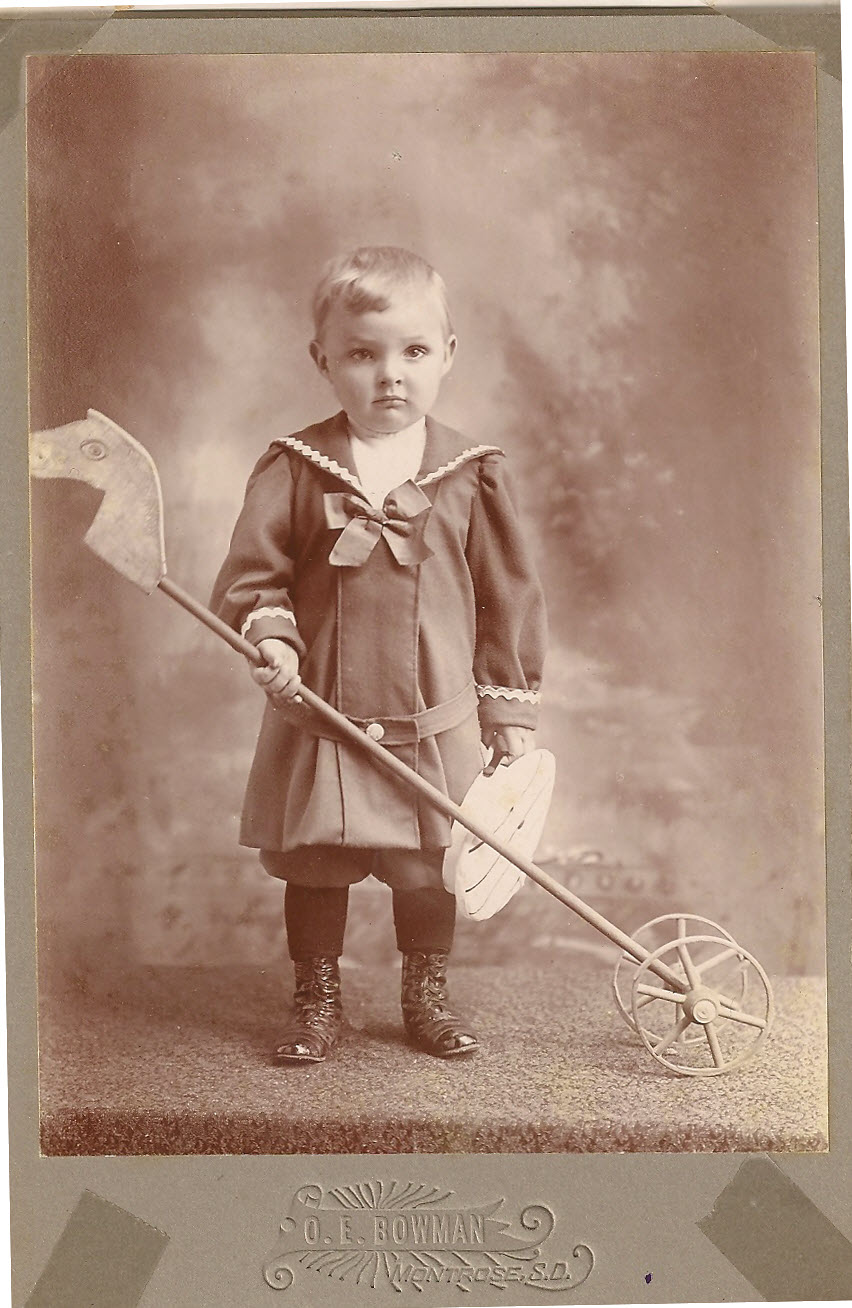
Unidentified photograph in the Eberlein family collection. Based on the location of the photographer, I think the child is Walter, son of Nathalie (“Dolly”) Eberlein and Gustav Carl Pluedemann. Dolly and Gus lived in Montrose, South Dakota between 1906-1922 (perhaps earlier and later) based on the geographic locations given for them in obituaries for family members.
Walter was born about 1903-1904 in Minnesota, based on information in the 1920 census listing for him.
20 Saturday Oct 2012
Posted in Diaries, letters, and manuscripts
My Father Emil Theodor Brenz Kriewaldt was born on the 9th March 1903 at Lobethal South Australia. He was the youngest son of Rev. Emil Paul Gerhard Kriewaldt and Emma Bertha Kriewaldt nee Eberlein.
After completing his primary education at the Lutheran schools at Lobethal and Tarrington he enrolled at Concordia College, Adelaide in 1916 for his secondary education. However this was only to be for a very short time as on the 25rd. of May his beloved Father died of tetanus at Tarrington, Vic. at the age of 46.
Later on this year Grandma and her four boys, Fred aged 20, William 17, Martin I5, Emil 13 and adopted son Eddie left for the United States.
The family settled in Grandma’s home town of Shawano, Wisconsin where they stayed for about 18 months. While at Shawano, Emil studied at Concordia College in Milwaukee.
In June 1918 the family resettled in Requa, Northern California , which is about 330 miles North of San Francisco. Grandma writing to the Shawano Journal on June 13, 1918 states that Fred and Willie are working at a cheese factory in Requa, Martin is working on a dairy farm, Emil is doing odd jobs around the town, and my adopted child Eddie is outdoors all day long having the time of his life. She also states that in the fall Martin goes to the University of Berkeley and Emil to Concordia College Oakland. Emil proved to be an exceptional student as his report card of the second semester 1918-1919 shows that his lowest marks were 95% for English and his highest being 100% for Latin. ln his last year at Oakland he competed in a poetry competition which involved 9 other colleges. Emil won 1st prize for “Good Friday”, 4th prize for “Sonnett” and 6th prize for “A dream of home”.
After graduating at Oakland he enrolled at his Father’s alma mater in 1922: Lutheran Seminary, St. Louis Missouri. As a student he became involved in a historic event, namely the first broadcast of the Missouri radio station K.F.U.O. from the old Seminary building in South St. Louis. After the first broadcast had been made, and the announcer and technicians had left around meal time, Student Kriewaidt was left to man the station and attend to any inquiries “on air”.
Emil attended the Seminary from September 1922 until his graduation on June 10th. 1925.
During his time at College and Seminary he had to live very frugally because his widowed Mother did not have the means to fully support him financially. Consequently he took many Jobs during vacations such as farm work in Nebraska, grape picking in California, school teaching in Wisconsin 1924, working on the railroad; in a fish cannery and a shoe store.
He returned to Australia after graduation and received a call to serve the Karoonda parish of the Lutheran church which is in the Mallee of South Australia. Life there must have been pretty rough, first of all being single, secondly not owning a motor vehicle and thirdly not having a church building to worship in. Services were held in Hoff’s homestead until members increased forcing the services to be held outside the home under a large tree. During his 5 years at Karoonda a church was finally built even though times were very hard due to the depression, poor harvests and grain prices.
In 1930 Emil received and accepted a call to serve the Brinkworth, Blyth and Canowie Belt Parish. He was to remain there for the next 36 years.
On May 24th, 1933 he married Rubina Wegener from Palmer, South Australia. From this union three sons were born: Brenz, Neville and Peter. Neville and Peter subsequently followed our Father and Grandfathers footsteps and also became pastors in the Lutheran Church,
At Brinkworth he played golf on Saturday afternoons for a short time until the elders suggested to him that it would be more profitable for him to be home in his study preparing his sermons for Sunday. This was rather ironical as within another generation members were absent from church due to bowling and other sporting commitments.
For many years he belonged to a rifle club using a regulation Lee Enfield .303 rifle. He was quite a good shot and won a number of trophies for his prowess.
During his years at Brinkworth he established another congregation at Clare and also at Yacka. He was very interested in the youth of the church and was for many years editor of the youth magazine, The Luther League Monitor. He was also very much involved with the Churches work with Aboriginals being a board member and later chairman of Aboriginal Missions.
This involved a great deal of extra work such as travelling to meetings in Adelaide with Government officials a round trip of over 200 miles and many trips on unsealed roads to the mission stations of Koonibba and Yalata on the far west coast of South Australia which meant a round trip of 1000 miles, quite often in his 2 cylinder 2 stroke, D.K.W. car.
During the war he tried to enlist in the Air Force at the same time as his Brother Martin, out was turned down because of his eye sight. Also during the war he joined a home defence force called the Volunteer Defence Force and participated in marching with wooden guns and throwing stones as make believe hand grenades.
He was very proud of his country of birth and even wrote to the Army Invention Directorate during the war with suggestions for a “Sticky bomb” and a use for Nitrogenous rock as a substitute for super phosphate which was in short supply.
Emil was also very community minded. He served for many years on the school committee, a director of a local community store, purchased and operated a school bus and served on various other committees.
His pastoral duties were many and varied, usually preaching 3 times a Sunday (with congregations 80 miles apart) attending 3 or 4 Ladies Guilds and Youth meetings 3 month and weekly confirmation lessons at most congregations, religious instruction lessons at schools, hospital visiting in the parish as well as Adelaide and attending the many congregational and parish meetings etc.
In fact, my two Brothers and myself saw very little of our Father except on Sundays when of course we were expected to attend all 3 services.
In 1971 there were a number of so called “peace marches” protesting about Australia’s involvement in the Vietnam War. My Father deplored all wars but he considered that once our servicemen were committed we should support them particularly when the protest marchers carried “Viet Cong” flags and shouted obscenities to anyone who disagreed with their philosophies.
He wrote a number of letters to the Adelaide papers stating his views and soon other letters followed from other writers both for and against the marches. Even though he received many personal letters supporting his views and stand, never the less I think he was considered by many to be a rebel. Our Father was also opposed to the timing of the amalgamation of the two Lutheran Synods. He believed that too many compromises were made in order to achieve a premature union.
In fact in those days a common phrase was “We agree to disagree”.
His stand on this issue made him somewhat of an outcast with some other pastors and church leaders, but I think he can be applauded for acting according to the dictates of his conscience.
He also took a keen interest in politics and received regular copies of proceedings of State and Federal parliaments over many years and wrote numerous letters to politicians either to praise or criticize them or their policies.
He attempted to retire in 1966 from Brinkworth but was persuaded to serve the Hillcrest congregation in Adelaide on a part time basis of 4 days per week at an annual stipend of $1680-. However he soon found out that he was working nearly 7 days a week, but of course only being paid for 4. During this time he was also appointed prison chaplain and regularly visited and conducted services at the Adelaide and Yatala men’s prisons and also the women’s rehabilitation centre.
ln 1972 he suffered a heart attack at the age of 69 which slowed him down somewhat. On the 7th September, 1975 he was privileged to celebrate the 50th anniversary of his ordination at the Dernancourt church (formerly Hillcrest.)
On the morning of Aug. 3rd. 1977 as he was about to leave home to give a talk on his prison chaplaincy at a Lutheran Women’s zone conference he suffered a massive heart attack and left this vale of tears to be with his Saviour whom he had faithfully served for 52 years and to rejoin his Father Mother and Brothers whom he dearly loved.
In summing up I would say we were indeed privileged to have such a loving, kind, tolerant, humble Father, Grandfather and Husband.
20 Saturday Oct 2012
Posted in Individual portraits, Military
Michael G. Eberlein attended the U.S. Naval Academy at Annapolis for one year. According to his obituaries, poor health kept him from returning and finishing his education there.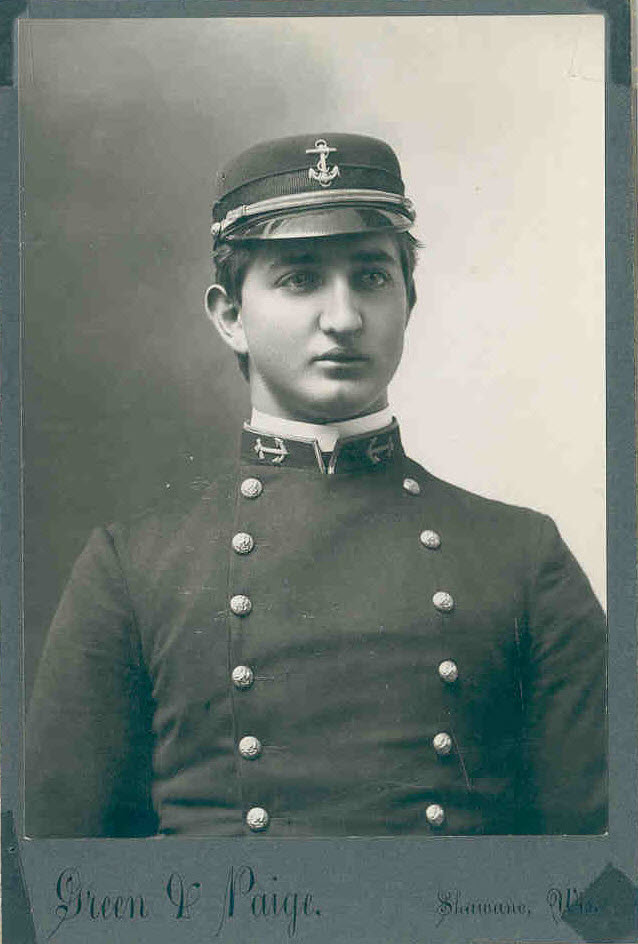
19 Friday Oct 2012
Posted in Church records
View a scan of the original Auszug aus dem Sterberegister/Extract from the death certificate.
Berstorbener
Eberlein, Friedrich Albrecht
Bürger, Wagner u. bauer in Züttlingen
Alter: 38 Jahre 1 Mon. 7 tagn
Ehegatte des Bestorbenen
Eva Catharine geb. Ullrich aus Sattelbach, Oberamt Mosbach
Eltern: Malthes. Eberlein [symbol for deceased] bürger u. bauer in Züttlingen
Catharine Barbara geb. Mehlhaf von Möckmühl
Sonstige für die Abstammung wichtige Angaben
Todesursache: Menschenpocken von seiner Fraü, welche wieder
genaß
Todestag: 15. Februar 1841 nachm. 2 Uhr
Becadizung: 16. Februar 1841 abends 4 Uhr, in aller Stille züm Friedhof gefahren. Am 14. März, Sonntag Oculi, nach Genesung der Fraü des Eberlein auf Verlangen desselben: Leichenpredigt über Hiob 19,25
Decedent
Eberlein, Friedrich Albrecht
Townsman, wagon maker, and farmer in Züttlingen
Age: 38 years, one month, 7 days
Spouse of decedent
Eva Catharine, nee Ullrich, from Sattelbach in Mosbach district
Parents: Malthes. Eberlein, deceased, townsman and farmer from Züttlingen; Catharine Barbara, nee Mehlhaf from Möckmühl
Other important information for the decedent
Cause of death: Small pox from his wife, who recovered
Day of death: 15 February 1841 pm. 2 clock
<? Becadizung>: 16 February 1841, a silent procession to the cemetery. On 14 March, Oculi Sunday [1], after the recovery of Eberlein’s wife and by request of the same: Funeral service about Job 19:25
[1] The third Sunday in Lent
19 Friday Oct 2012
Posted in Gravestones
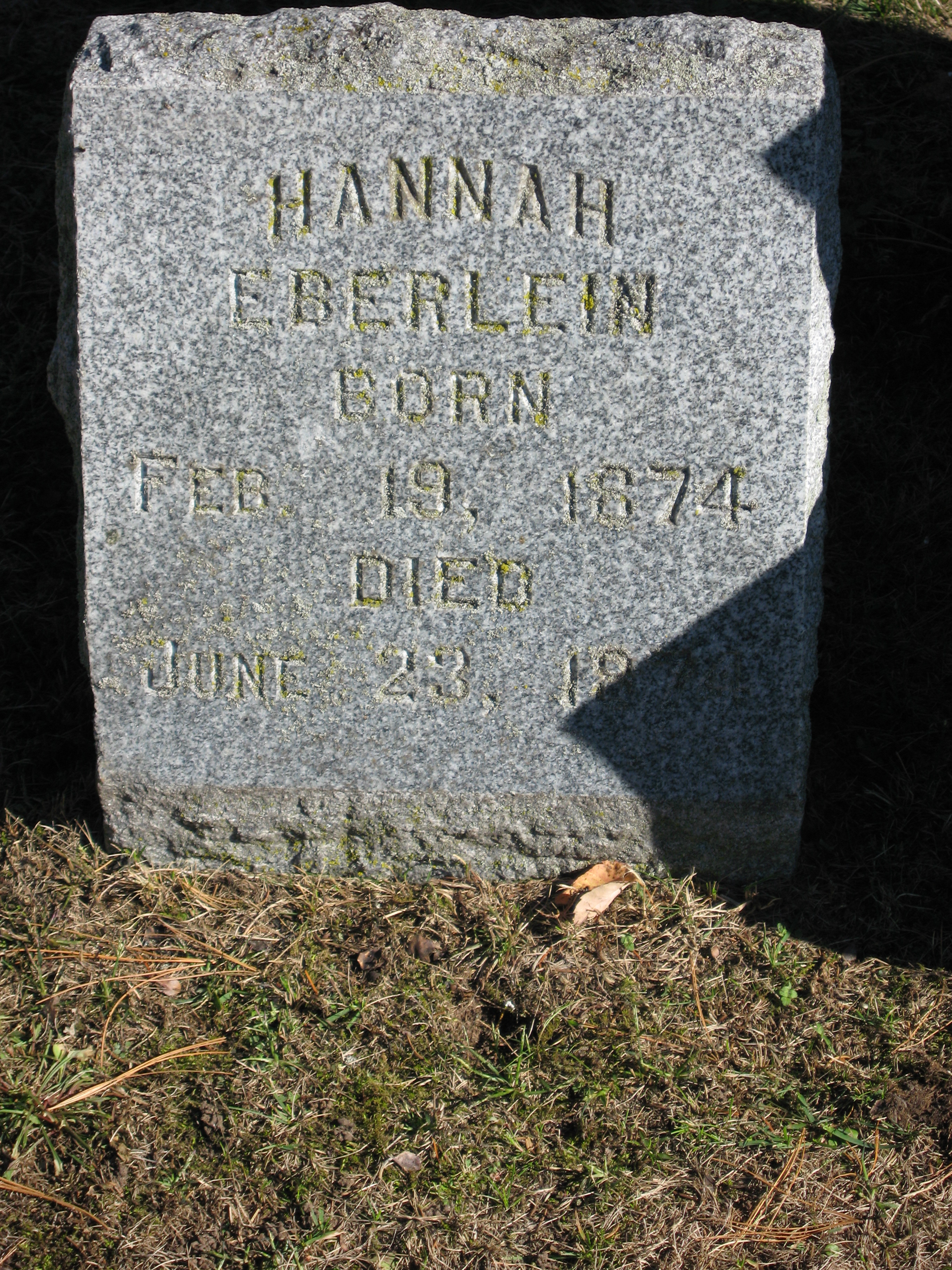
Gravestone, Hannah Eberlein, Woodlawn Cemetery, Shawano, Wisconsin. Photograph taken by Kristen James Eberlein, October 2007.
Hannah Eberlein
Born
Feb. 19, 1874
Died
June 23, 1874
19 Friday Oct 2012
Posted in Newspapers
“Michael Eberlein is well pleased with the returns that he has received so far from the examinations at Madison for a state certificate. He wrote on nine branches and has passed on the five that he has heard from and feels confident that he will pass on the others. He is one of seven that passed in algebra out of over one hundred that tried. He is only seventeen years old and will probably be the youngest holder of a state certificate in Wisconsin. This speaks well of the Shawano High school.”
Source: Photocopy of clipping from the Shawano Advocate, hand-dated June 1898, in the Frederic C. Eberlein genealogical papersa.
 Eberlein genealogy and photographs