Posted by Kristen James Eberlein | Filed under Other photographs
22 Monday Oct 2012
Posted by Kristen James Eberlein | Filed under Other photographs
21 Sunday Oct 2012
Posted in Other photographs
Tags
Alwina Duecker (1885-1968), Frederic C Eberlein (1919-2010), Frederick A Eberlein (1875-1956), Margaret R Eberlein (1910-1962), William F Eberlein (1917-1986)
Frederick A. Eberlein raised foxes at his farm in Shawano.
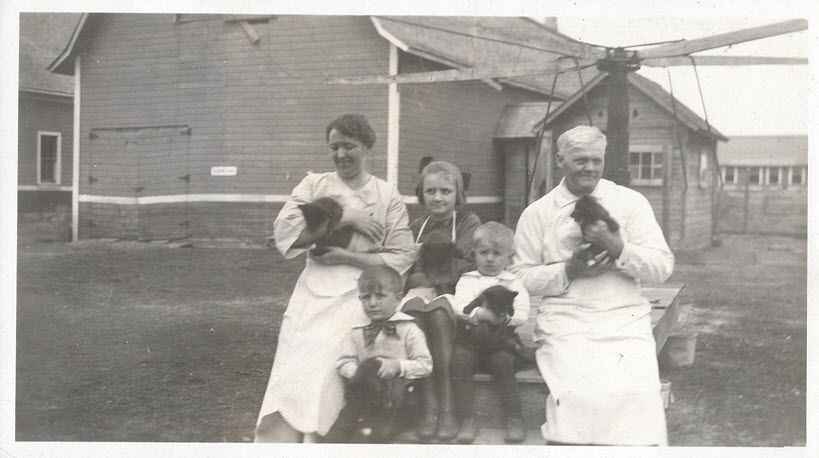
Back row: Alwina Duecker Eberlein; Marge Eberlein; Fritz Eberlein; Frederick A. Eberlein
Front row: William F. Eberlein
21 Sunday Oct 2012
Posted in Newspapers
‘You see,’ said Mrs. Kriewaldt, ‘after a boy has enlisted in the army, had received training and had shipped to England, it was easily six months from time of enlistment before he saw any fighting. No wonder the boys had the spirit of adventure. When the troops left Australia a demonstration was always given the boys. Great crowds gathered at the wharves. The soldier boys had long paper ribbons rolled up in a roll. One end of this was held by the soldier’s sweetheart, and the other by the soldier on board. As the ship steamed away from from the dock, the ribbon was let out it’s [sic] entire length and still the two held on, until the ribbon had stretched to the breaking point. Thus were the love ties broken in allegory. The crowds sang God Save The King and Rule Brittanica and the bands played patriotic march tunes.”
“My own boys caught the inspiration, and in all seriousness began to talk of enlisting, and the oldest one, you know, might easily pass the age limit. Well, I tried to show him that what he had seen was only the grandeur of war, that the awfulness of it was something remote, but most terribly real. I then proposed to him that if it were adventure and a trip that he wanted, we would come to American,” said Mrs. Kriewaldt, “and here we are.”
“We have a farm and some other property back there, which I have left in the hands of a good Christian friend until the war is over. No German can sell property there, no one with German blood even three generations removed can sell or buy property without the permission of the government. The reason for this strict rule is that they fear that the money received from the sale might fall in the hands of the enemy. I could have secured permission from the commission I think, but all I would have been allowed to take out of the country was two hundred fifty dollars. So, what was the use?
“Rather than make such sacrifice out of my property, I preferred to leave it with this friend and run the risk of it surviving the war. One of our neighbors went away to fight the enemy and left a wife with ten children. When I think of this, I am so glad that we had this dear America to come to. Naturally my heart is back in that land that meant so much to me, and to my husband and children, but the boys are fast acquiring American ways and I think they are going to like it here, and of course it is easy for me to resume the manners and costumes that I knew in my childhood, in this my native land.”
The End.!
Source: Photocopy of article from the Shawano County Journal, hand-dated Jan 1917; paragraphs added. In the Frederic C. Eberlein genealogical files.
21 Sunday Oct 2012
Posted in Individual portraits
This photo was unidentified, other than a penciled note made by my Uncle Fritz — “? Reichel,” but I think the resemblance to the oldest child in the portrait of Reichel children is unmistakable. She probably did not use Mary as her name; census records for 1900-1940 list her as “Catherine,” “Katherine,” “Kathryn,” or “Catheryn.”

20 Saturday Oct 2012
Posted in Diaries, letters, and manuscripts
University at Buffalo
State University of New York
Office of the President
September 11, 1998
The Eberlein Family
c/o Dr. Patrick B. Eberlein
Department of Mathematics
CB #3250
University of North Carolina
Chapel Hill, NC 27599
Dear Dr. Eberlein:
On behalf of the entire University at Buffalo community, please accept our heartfelt sympathies on the death of your mother. A world-renowned leader in mathematics and computer science, Pat meant a great deal to the university, as well as to me personally. Her years of dedication and work helped to build UB in many, many ways. She will be long remembered at UB as one of the pathbreaking mathematicians of her generation and—as one of the first women to take on a leadership role in computer science—a role model for many admiring students and colleagues.
Pat’s innovative research in mathematics led directly to the development of the computer—perhaps the most significant invention of the twentieth century. Her visionary leadership propelled her profession and the university into the future, creating at UB a computer science program of national standing. On a purely personal level, I have lost a good friend and colleague. One of the great pleasures of my years of service here was the opportunity to know Pat and work with her. I have missed seeing her during her retirement, and now that loss is, sadly, permanent. Know that you have my deepest personal condolences.
Pat’s contributions to our university are significant and lasting, and we are grateful to have had the privilege of her presence at UB for so many years. While we realize that words may offer little comfort at times like this, our thoughts and prayers are with you all. If there is anything that the university can do for you, please let us know.
Sincerely,
William R. Greiner
20 Saturday Oct 2012
Posted in Individual portraits
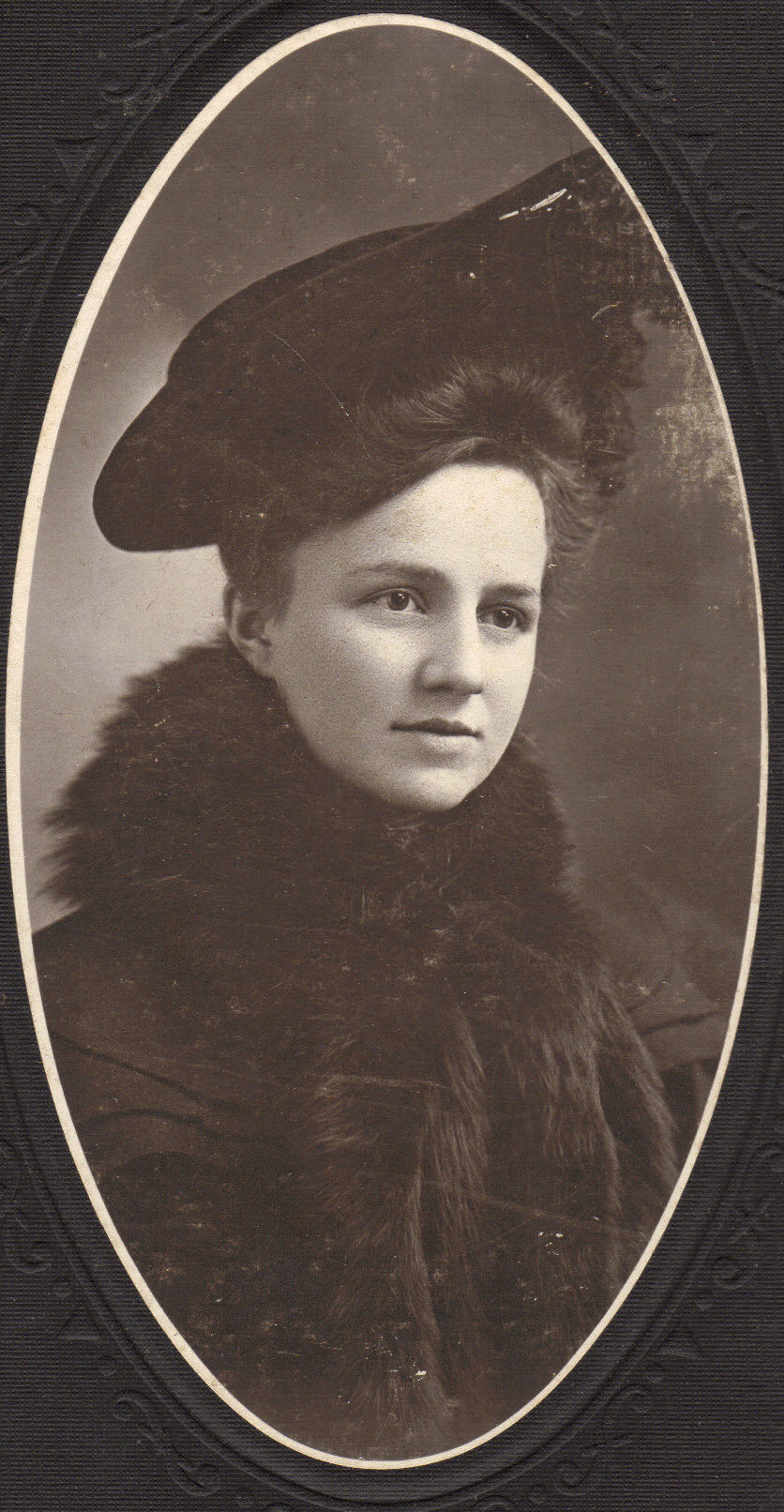
Lora Elizabeth Rather. Framed photograph hangs in the Eberlein Redpath house in Shawano, Wisconsin.
20 Saturday Oct 2012
Posted in Newspapers
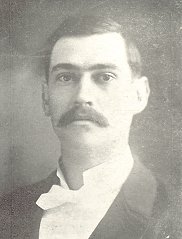 “Rev. H. Kellermann, the next Pastor of the church, served the congregation from 1916 to 1917, coming from St. Louis, Mo., and was installed by Rev. Paul Heckel of Chattanooga, on May 14th, 1916.
Pastor Kellermann before accepting our call, had been out of the ministry some time on account of impaired health. But his zeal for the Lord’s work induced him to take new courage, brave the weaknesses of the body and come to us, solely to bring the word of God to thirsting souls. However he did not recuperate as he had hoped, his health continuing to decline. A man of exceedingly fine intellect, broadened by travel in foreign countries, bright in mind, willing in spirit, he found himself fettered by an ailing body, unable to continue in the pressing duties connected with pastoral work, in a growing congregation, and although the congregation in its effort to keep him, prevailed on him to take an extended vacation, Pastor Kellermann finally felt constrained to offer his resignation which the congregation reluctantly accepted. He preached his farewell sermon November 11th, 1917, and with his family, took leave for a stay in Southern Florida.”
Source: First Evangelical Lutheran Church, Fiftieth Anniversary Manual, Knoxville, TN: 1919
20 Saturday Oct 2012
Posted in Other photographs
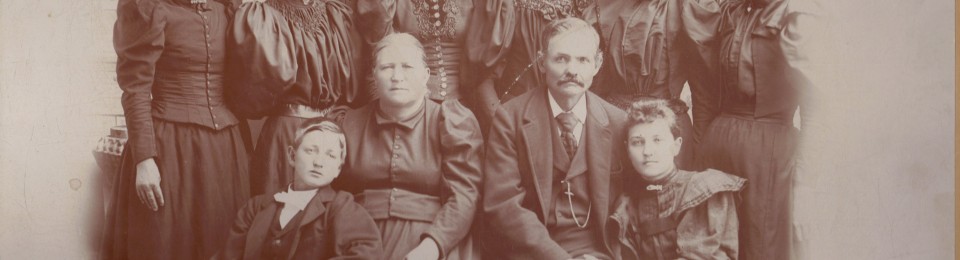
In 1906, when her mother died, Wilhelmina Eberlein and her husband, Rev. Hermann Kellermann, lived in Cape Girardeau, Missouri. So, I am assuming that this is a photograph of two of their children.

Unidentified photograph in the Eberlein family collection, Shawano, Wisconsin
20 Saturday Oct 2012
Posted in Other photographs
Tags
Frederic C Eberlein (1919-2010), Margaret R Eberlein (1910-1962), William F Eberlein (1917-1986)

Left to right:
Nick Volkman; Marge Eberlein Volkman; Fritz Eberlein; Bill Eberlein
Source: Photo album of Lora Rather Eberlein. Scanned by Kristen James Eberlein in October 2007.
20 Saturday Oct 2012
Posted in Obituaries
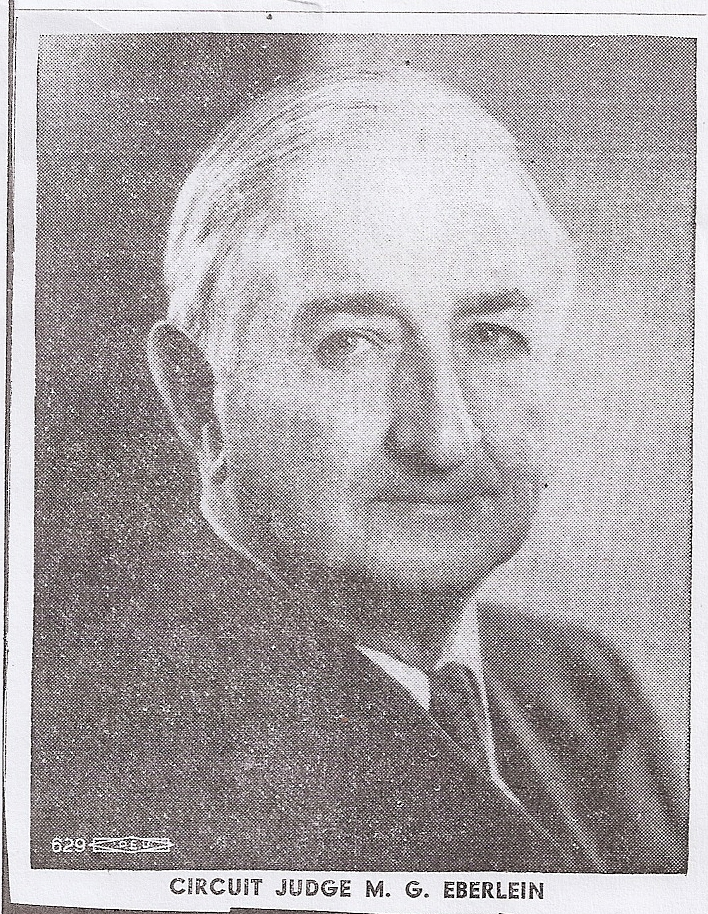 A heart ailment of several years standing has ended the life of Circuit Judge Michael G. Eberlein, one of Shawano county’s most widely-known and respected residents.
Death came unexpectedly about 4 o’clock this morning at his home at 125 S. Franklin Street in Shawano. He died in his sleep and his body wasn’t discovered until shortly before 8:30 a.m. Funeral arrangements, which will be under the direction of the Karth Funeral Home, have not yet been completed.
The story of Judge Eberlein’s amazing active and varied career is a tribute not only to the man’s personal character but to the entire American way of life. Born of immigrant parents, he worked his way into a prominence — local, state, and national — that few men attain. His death is a staggering blow to both his profession and his community.
THE JUDGE had been in ill health for six or seven years, but, to the limit of physical endurance, he stayed on the job to the very end. Only yesterday he presided over a case in the Shawano county courthouse and went home at the end of the afternoon in apparent good health.
Eberlein, who was 72 years old at the time of his death, was in his first elected term as judge of the Tenth Wisconsin Judicial Circuit. He was appointed in 1946 to serve out the unexpired term of Senator Joseph McCarthy, then re-elected in April, 1951. His present term would have ended January 1951.
Michael Gustave Eberlein was born in Shawano July 31, 1880, the youngest of fifteen children. His father, Frederick Eberlein had emigrated [sic] to the United States from Germany in 1854. He married German-born Catherine Gerner in Pittsburgh in 1858, and eleven years later, moved to the town of Herman in Shawano county. Judge Eberlein’s parents, the second settlers in Herman developed a prosperous farm but sold it and moved to Shawano in 1879.
Four of the judge’s fourteen brothers and sisters are still living: Frederick and Charles of Shawano, Mrs. Minnie Kellerman, who lives in Florida, and Mrs. Natalie Pludeman of Chicago.
THE FAMILY lived across the street from the courthouse, and young Mike often spent his afternoons living to the long and involved sessions. He was barely out of knee-pants when the ambition to become a judge first struck him. He never lost that urge, and his appointment to the Tenth Circuit post in 1946 was something he regarded as the most treasured event of his life.
Eberlein was one of the finest judges the Tenth Circuit ever had. In December, 1950, he was given a joint endorsement by the Outagamie County Bar Association and the county board for his “outstanding job in clearing up a cluttered calendar of cases” and for “the way that you have disposed of and settled many cases without expensive jury trials, thereby saving the taxpayers much money.”
He was praised for making the Outagamie county law library “one of the best,” and for “freely giving your time to counsel the county board and its committees,” and for “your outstanding judicial ability and the superios manner in which you have handled your court.”
L. Hugo Keller, chairman of the county board, said, while making the presentation, that “the greatest reward any man can receive is the respect of the people he serves. In you we find such a man.”
Judge Eberlein accepted the commendations “with gladness in my heart; they are the finest gifts ever offered me. When I took this job, I had only one ambition … to do a good job. And when I leave I want you still to think so.”
THE THOUSANDS of people in Shawano, Outagamie and Langlade counties (the Tenth circuit) who are mourning his death today bear mute testimoy to Judge Eberlein’s greatest wish.
Eberlein was graduated from Shawano high school with the class of 1897, and a few months later won an appointment to the United States Naval Academy at Annapolis. He lead his class scholastically during the first year at Annapolis, but was forced to resign before the start of the second year because of ill health.
Mike returned to Shawano County, taught three years in the Bonduel grade school and served another year as principal of the elementary school in Shawano. He began studying law about that time and, in 1902, entered the University of Wisconsin law school, where, after only eight weeks, he took and passed the state bar examination.
He continued his studies at the university, however, and won his law degree in 1904, one of the few attorneys in Wisconsin to have argued cases before the state Supreme Court before his graduation from law school.
A 42-year career as one of Shawano’s most successful practicing attorneys followed this auspicious beginning. Mike and his brother, Frederick, were partners until 1913. A year later Mike and the late Albert S. Larson formed a partnership that continued for 17 years.
EBERLEIN practiced alone from Larson’s death in 1931 until the summer of 1932 when Ovid Strossenreuther, present Shawano county district attorney, joined the firm as a junior associate. Joe McCarthy took Stossenreuther’s place in 1936 and remained in the office until he was elected circuit judge in 1939. Appointed circuit judge by Gov. Walter S. Goodland on December 1, 1946, to fill McCarthy’s unexpired term, Eberlein retired from private practice. Two of his sons, however, have kept the firm alive, Michael, jr., joining his father in 1939 and Frederic in the summer of 1946.
When Judge Eberlein was reelected a year ago last April, it was the first time he had won public office at the polls. Mike was an unsuccessful candidate for
Congress in both 1916 and 1918; he was the Republican candidate for attorney general in the state election of 1930; and he was defeated in the 1940 Republican primary election for United States Senator.
In the course of his law practice, Eberlein argued more than 300 cases before the supreme court of Wisconsin. In six years as judge, he tried more than 2,000 cases, on a handful of which were appealed and fewer still reversed by a higher court. He was admitted to the bar of the United States Supreme Court, the Chicago Circuit Court of Appeals, and both the eastern and western district courts of Wisconsin.
EBERLEIN retained some of his father’s interests in agriculture, and until when giving them up when he began his career on the circuit court bench, was part-owner with his brother Frederick, of several fine farms in Shawano county and one of the state’s largest potato farms, a 1,400-acre tract in Langlade county.
Mike was married July 31, 1906, his 26th birthday, to the former Lora Rather of Fond du Lac, a teacher in the Shawano school system. Mrs. Eberlein survives the judge along with five children, Michael, jr., and Frederic, both of Shawano; William, professor of mathematics at the University of Wisconsin; Dr. Walter Eberlein, a member of the staff at the famed Johns Hopkins hospital in Baltimore, Md.; and Margaret, Mrs. Lester G. Volkman of Oshkosh. One other son, Robert, died at the age of ten during the 1918 influenza epidemic.
Six grandchildren and his four brothers and sisters also survive.
JUDGE EBERLEIN loved Shawano and steadfastly maintained an interest in community affairs even though his duties as judge kept his away for weeks at a time. He was an active member of St. James Lutheran church, a charter member of the St. James Men’s Club, and one of the founders of the Wolf River Council of Lutheran Men’s Club.
He was a charter member of the Shawano Rotary Club, a member of the local board of education for many years, and an original trustee of the Shawano Municipal hospital.
A conservative Republican politically, Judge Eberlein always respected the opinions of the opposition, and enjoyed nothing better than the chance to argue politics wherever and whenever the opportunity presented itself. He built a successful law practice through hard work and extraordinary application of the one of the sharpest legal minds in Wisconsin, Yet he remained at heart the small town boy with a fine sense of practical living and exemplary moral character.
AN UNCOMMON common man, the judge lived a rich and full life. The first of his two greatest ambitions were realized when he became a judge. The second, to be remembered as a fair and honest judge, will be recorded in the hearts and memories of the thousands that he has served.
But there is one more achievement in Judge Eberlein’s career, that of becoming a respected leader of men. The sadness his death brought today to the people of Shawano and those who knew him everywhere is the finest memorial any man could have.
Source: Shawano Evening Leader, Tuesday, 23 September 1952, page 1.
 Eberlein genealogy and photographs